
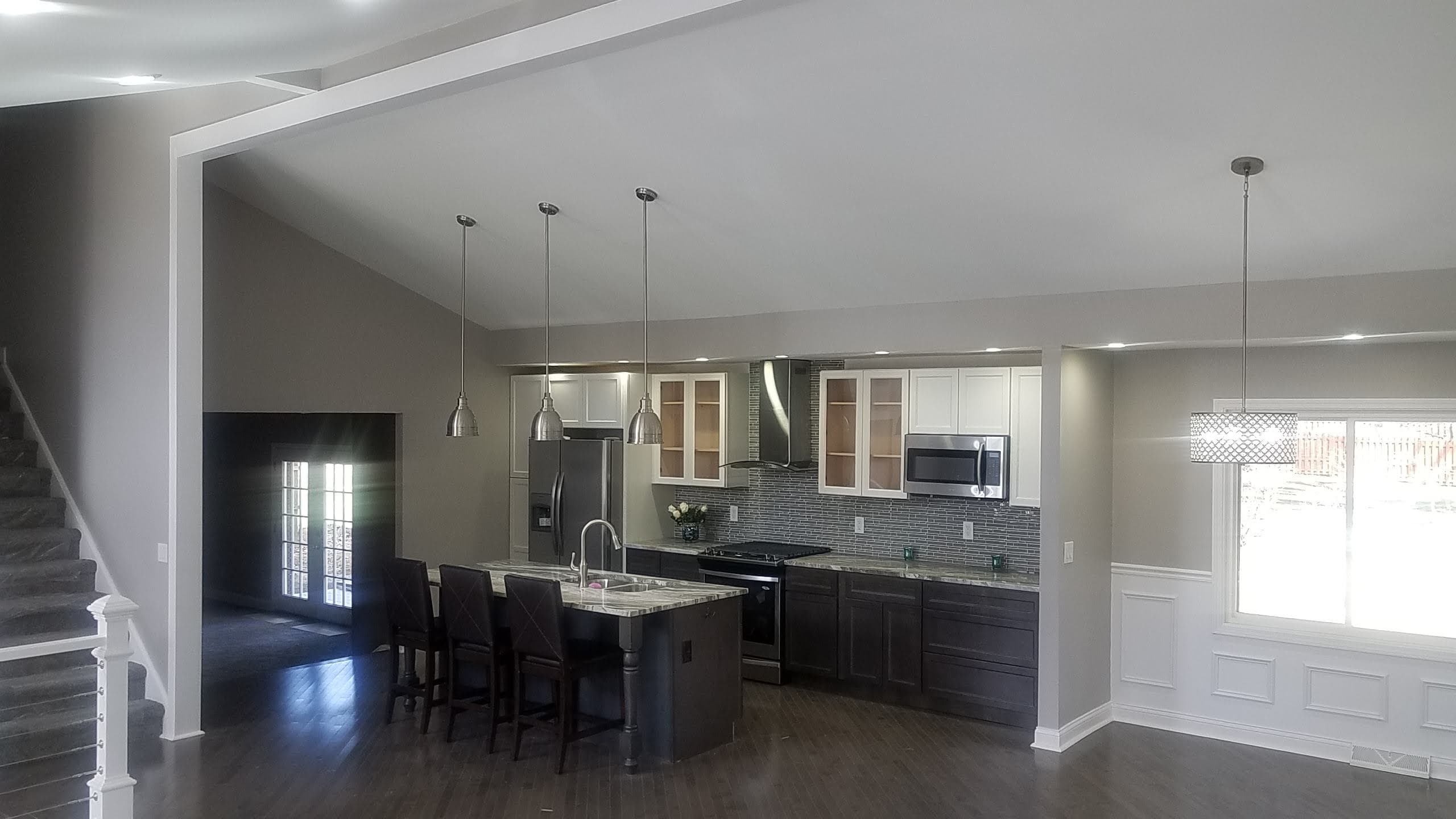
Modernizing a 1925 Cleveland Kitchen Without Losing the Soul
Older Cleveland homes have layouts that don't match how we live now — but the bones, trim, and proportions are why we love them. Here's how we modernized a Lakewood-area bungalow kitchen without flattening its character.
Older Cleveland homes have layouts that don't match how we live now. Open concept wasn't a design philosophy in 1955 — it was a constraint of how we built houses before steel beams and modern HVAC made it possible to take walls down. So when a homeowner asks us about kitchen remodeling in an older Richmond Heights or South Euclid home, we don't reach first for the sledgehammer.
We start by sitting in the kitchen for fifteen minutes. Where does the morning light come from? Where do you put your coffee? Where do the kids do homework — even now that they're grown? The architecture has answers in it already. The 1925 kitchen wasn't designed for a family that cooks every night, but it was built with ten-foot ceilings, original fir floors, and 3½-inch door casings that modern homes can't afford to replicate. The task is modernizing without erasing what makes the house worth living in.
On a typical 1920s kitchen, we'll open up the passage to the dining room (removing the cased opening and widening the opening with a cased beam), replace the original wall-hung cabinets with custom cabinetry that matches the original millwork profiles, and install stone countertops that feel appropriate to the era — usually honed marble or leathered granite, not polished quartz. Semi-custom cabinets in painted Shaker work, but for this period of architecture, we often spec inset custom cabinetry in a painted finish because the proportions are more authentic to the house.
Questions about your kitchen?
Curtis gives free in-home estimates — no pitch, no pressure.
The plumbing in a 1925 kitchen is almost always galvanized — it's going to come out regardless. This is the moment to run the sink to wherever it actually makes sense rather than where it was in 1925. It's also the moment to add the garbage disposal circuit that was never there and to put the dishwasher on its own dedicated circuit rather than stealing amps from the refrigerator.
The kitchens we're most proud of in this era of housing are the ones where guests can't tell what's original and what we built. When the cabinetry profiles match the door casings, when the crown moulding ties into the original frieze board, when the floor is the same fir (or a new fir that matches) — the kitchen feels like it always belonged there. That's the goal. Not a modern kitchen dropped into an old house. A kitchen that earned its place.
Ready to talk?
Schedule a free in-home consultation
Curtis visits your kitchen, gives you an honest read on scope, and leaves you with a real investment range. No obligation, no hard sell.
This post is part of the Local Remodeling Economics topic hub.